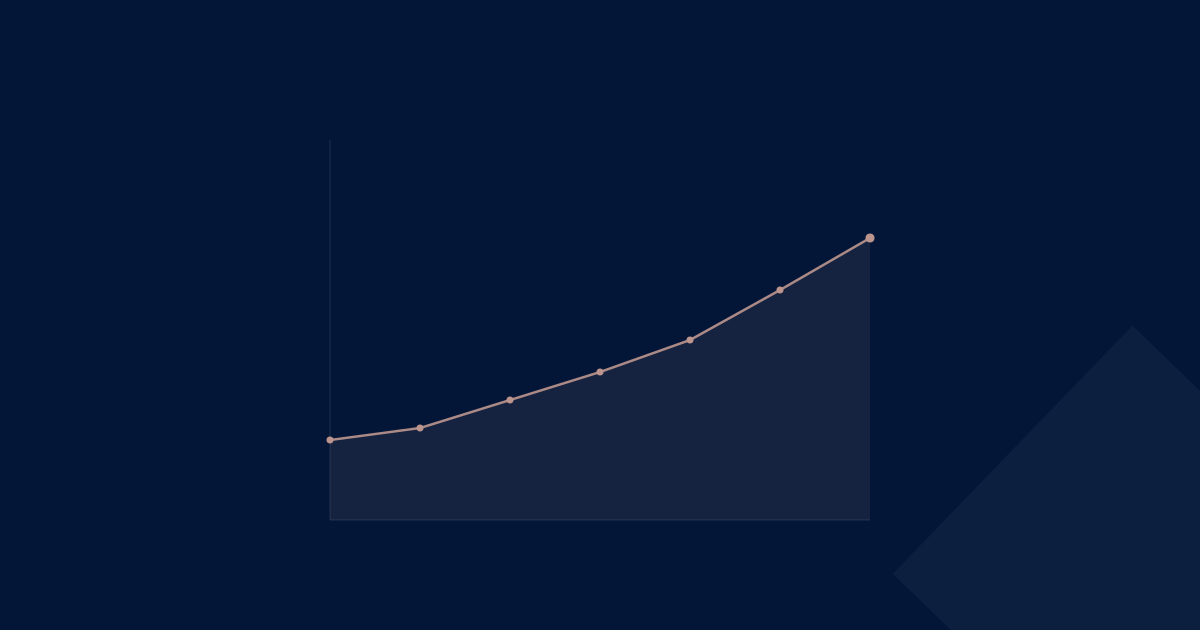
At every contract renewal, the discount goes up by half a percentage point. Once is a negotiation. Five years in a row is a slow drift toward cost.
Discount drift is the most predictable pattern in B2B pricing. It happens everywhere. It is rarely stopped. And it works not through one large mistake, but through a thousand small, individually defensible decisions that collectively erode your margin.
This article shows what discount drift is, why it occurs structurally in industrial mid-market businesses, and which four interventions actually make a difference — not stricter approval workflows, but smarter governance.
Key takeaways
- Discount drift = the pattern where discounts rise year over year without conscious decision, driven by asymmetric incentives and lack of visibility.
- Recognizing it requires three data views: variance within segments, customer evolution over time, and concentration of exceptions around quarter-end.
- Stricter approval workflows do not work. They only slow the organization down and shift the problem to the next mandate level.
- What does work: discounts that have a purpose, a term, and a measurable outcome — combined with exception tracking.
- Stopping discount drift typically restores 0.8 to 2.1 percentage points of net margin within 12 months.
What discount drift actually is
Discount drift is not a deliberate policy. It is a resultant — the cumulative outcome of thousands of small decisions that each looked defensible at the time. The account manager who granted 8% in 2019 to close a deal grants 14% in 2026. Not because the market has changed. Not because the competitor is cheaper. But because:
- "That customer simply has 14% now."
- "We gave it last year, so we cannot go back."
- "Otherwise the rep misses target."
- "It is only half a percentage point."
Four sentences spoken weekly in every sales organization. Each individual discount has logic. The pattern — a discount that only moves up — has none. But the pattern is also not measured anywhere. And what is not measured moves freely.
"Discount drift is not malice on the part of the sales team. It is a rational response to a system that rewards salespeople on revenue, not on margin. When targets are tied to volume and there are no guardrails, salespeople use the tools they have. Discount is always the easiest one."
Three data views that expose the pattern
Want to know whether your organization has discount drift? Three analyses on your own data are enough. No software needed — Excel suffices if you have an ERP export.
View 1 — Variance within segments Take customers with comparable volume, sector, and order pattern. Plot their net discount (after all on- and off-invoice deductions). When the variance within one segment exceeds 5 percentage points, you do not have segmentation — you have arbitrariness. That is a classic drift symptom.
View 2 — Customer evolution over time Select your top 30 customers and plot their average realized discount rate per year over five years. When the majority show an upward line — without corresponding volume or strategic growth — you see drift in action.
View 3 — Concentration of exception discounts Count the number of approved discount exceptions per week within the quarter. When 50% or more of exceptions concentrate in the final days of every quarter, you know that the quarter cycle is setting your pricing — not your commercial strategy. That is drift in acceleration.
An anonymized example from practice: a European industrial chemicals supplier, €88 million revenue, discovered during a diagnostic that its top-20 customers had accumulated an average of 2.4 percentage points of discount drift over six years — at stable or slightly declining volume. Translation to EBITDA: €2.1 million in avoidable loss, year over year.
Why stricter approvals do not work
The instinctive reaction of many CFOs and commercial directors is: "We tighten the approval flows. Discounts above X% come to my desk."
It does not work. Three reasons:
1. It shifts the problem. Sales simply learns to negotiate at X% instead of X+1%. The discount is still too high — it just stays within mandate.
2. It slows the organization down. Approval time is a competitive disadvantage. When your rep waits three days for a signature and the competitor does not, you lose deals. After a few losses, sales begins inventing workarounds.
3. It addresses symptom, not cause. The cause of drift is asymmetric incentives and lack of visibility on net contribution. Stricter approvals address neither.
"Stricter approvals are the defensive reaction. Margin governance is the offensive one. The difference: defensive reactions shift problems, offensive reactions solve them."
What does work: four interventions
Intervention 1 — Every discount gets a purpose, a term, and a measurable outcome. No more open-ended discounts. A discount is granted to achieve something: market introduction, volume uplift, strategic account build. With end date. With measurable KPI. And after the term: measurement, decision — renew or terminate.
Intervention 2 — Net Revenue in commercial incentive. As long as sales is held accountable on gross, discounts remain costless to sales. Move at least 30 to 50% of the bonus base to net revenue. Behavior changes within two quarters.
Intervention 3 — Exception tracking with learning loop. Every discount exception is logged: purpose, predicted outcome, approved by whom. Three months later the actual result is recorded. Six months later the pattern is fed back into policy. Not as punishment, as learning.
Intervention 4 — Customer-specific price list, not ad-hoc discounts. For strategic accounts: build a formal customer-specific price list rather than a list of exceptions on the standard price. This forces the logic to be made explicit — and revalidated annually.
Bottom line
Discount drift is not a problem you solve. It is a pattern you manage — as organizational discipline, not as one-off correction. Anyone who does not have drift visible in their own data cannot stop it. Anyone who has it visible but installs no governance loses the gain again within 18 months.
In the Pricetainability™ framework, discount drift is a test case for Governance: can your organization sustain the rhythm to question itself honestly? Businesses that can do this recover 1 to 2 percentage points of EBITDA that would otherwise leak structurally. Not through radical interventions. Through discipline.
Wondering where your profit margin is slipping away? Start with a diagnosis.
Request a Pricing Audit →