Insight into your margin:
the foundation for better decisions
Many SMEs have a clear view of revenue, costs, and growth, but a limited view of their true margin structure. It is precisely here that the greatest profit potential lies. A Pricing Audit maps out your entire commercial reality: from price lists to discount behaviour, from segment behaviour to process errors. The goal is simple: to understand where margin is lost and which structural opportunities remain overlooked.
In most organisations, pricing is not a conscious, managed discipline. Prices have historically evolved. Discounts have arisen from exceptions. Deviations are not documented. And teams have little guidance on how to apply prices correctly. This leads to margin erosion — slowly, silently, but with a significant impact.
A Pricing Audit changes that. You gain a substantiated, objective, and confronting picture of what is really happening behind the scenes. No assumptions. No gut feelings. Pure data coupled with logical advice.
While large companies often have sophisticated pricing teams, pricing within SMEs is usually combined with sales, finance or management.
As a result, many decisions remain situational or reactive. But pricing is a fundamental aspect, not a detail. A small deviation can have significant consequences over the course of a year.
An audit is essential when:
Margins are unpredictable despite stable revenue
Sales teams have their own interpretations of pricing rules
Exceptions are increasing and difficult to manage
cost prices have recently risen, but prices were not automatically adjusted accordingly
Customers are starting to negotiate based on history rather than value.
Product mix changes but price lists remain unchanged
The audit shows where the pain lies and where the greatest gain is.
What does a pricing audit deliver?
more predictable margins
clearer internal agreements
better direction for the sales team
fewer exceptions and discussions
higher profitability without additional sales
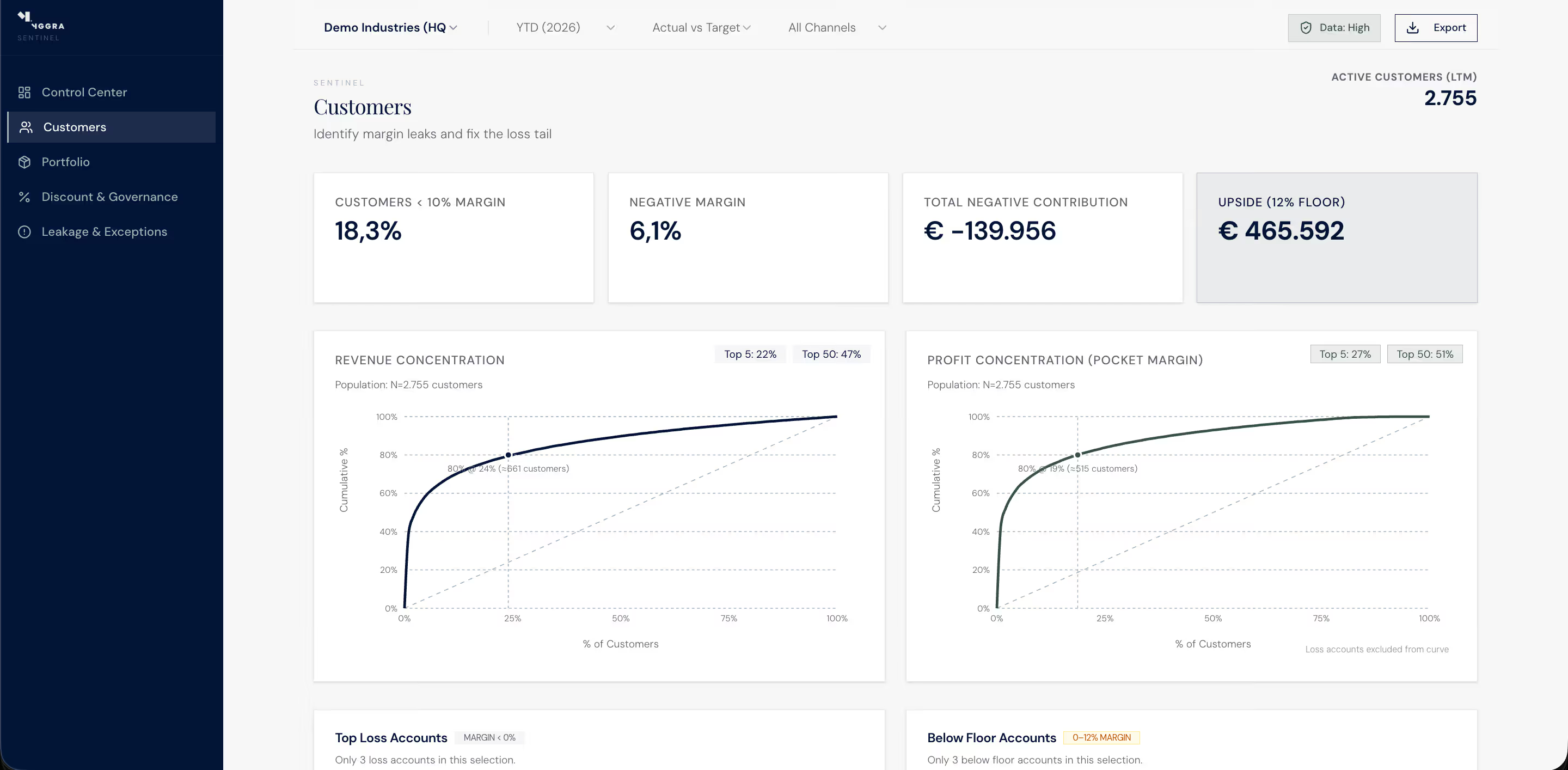
insight into which customers or products are structurally loss-making
a stronger foundation for strategic pricing decisions
What does a pricing audit examine?
Our analysis is broad, but sharply focused on the reality of SMEs: quick, pragmatic and fully applicable. We investigate, among other things:
1
Margin structure per customer and segment
Not every customer contributes equally to your profit. Some segments generate high volumes but low margins — others are just the opposite. The audit makes these differences visible, including historical trends.
2
Discount behaviour and exceptions
What discounts are typically given? What exceptions are never documented? How large is the gap between policy and practice? This is often one of the biggest sources of profit leakage.
3
Pricing errors and inconsistencies
Even small errors in price lists, ERP or cost prices can have significant consequences. We detect inconsistencies in product structures, tiers, bundles and service costs.
4
Margin Development Over Time
How does margin evolve with existing clients? How does it look with new deals? Where does margin gradually decrease unnoticed?
The audit clarifies these trends.
5
Variation within the sales team
Not every seller adopts the same approach. Some are stricter, while others are generous with discounts.
The difference in margin between sellers can be enormous, and we also map that out.
6
Impact of process and governance
Pricing is not just numbers; it is also a process. How are prices managed? Who is allowed to approve exceptions? Where do bottlenecks or misunderstandings arise?
This is included in the analysis.
Find profit leaks & growth opportunities
You will not receive an academic report, but a concrete and clear document that works at both the executive and operational levels.
The result contains:
• a clear list of priorities based on financial impact
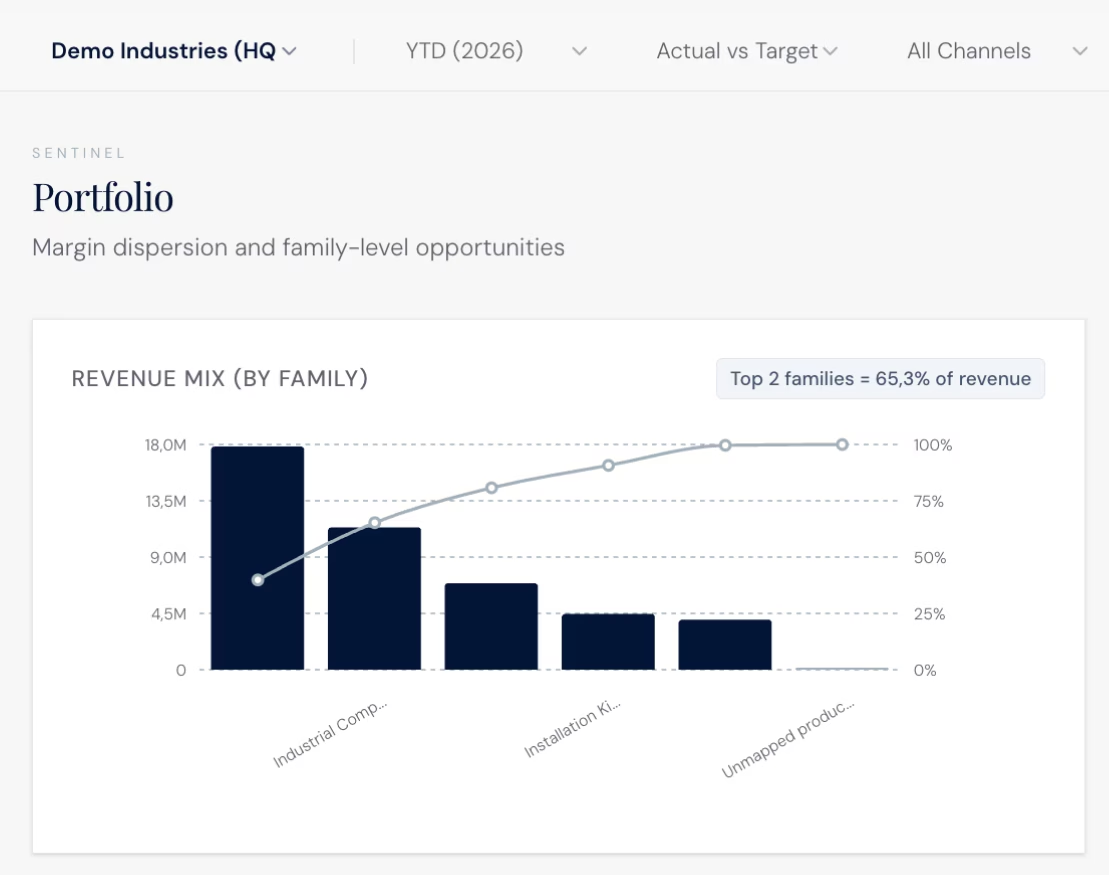
• visualisations of margin differences by customer, segment, and product
detection of errors, inconsistencies and risks
scenarios for margin improvement
recommendations for price discipline and governance
quick wins + structural improvements
• advice for implementation in ERP/CRM
The audit forms the basis for every subsequent step: pricing strategy, model development, or ongoing monitoring.
Who should use a pricing audit?
insight into where profit is lost
ready to evolve towards data-driven pricing